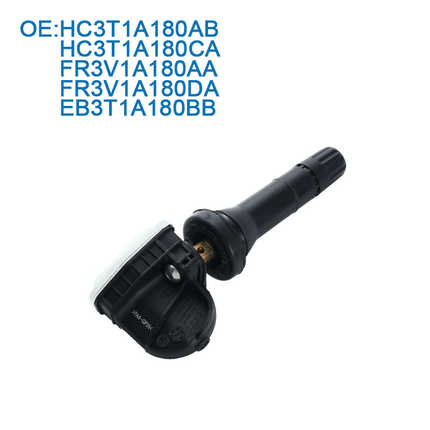
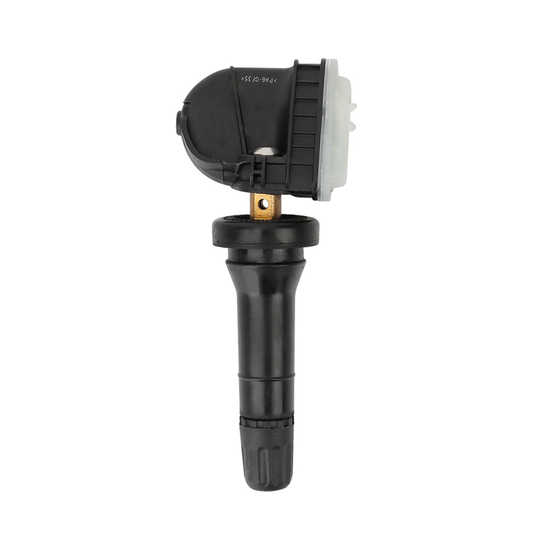
Ford & Lincoln TPMS Sensor – OEM-Grade Monitoring for Precision, Safety, and Peace of Mind
Why OEM-Grade TPMS Matters More Than You Think
Tire Pressure Monitoring Systems (TPMS) are no longer optional safety features—they’re critical components mandated by U.S. federal law (TREAD Act) and integral to modern vehicle performance. When your Ford or Lincoln displays a TPMS warning light, it’s not just an alert—it’s a signal that your vehicle’s intelligent safety network has detected a potential risk. That’s where genuine OEM-grade TPMS sensors make all the difference. Unlike generic aftermarket units, our Ford & Lincoln TPMS Sensor is engineered to replicate factory specifications down to the microchip level—ensuring seamless communication with your vehicle’s ECU, accurate real-time pressure and temperature readings, and reliable low-pressure alerts within ±1.5 PSI tolerance.
Material & Craftsmanship: Built to Withstand Real-World Demands
Every sensor undergoes rigorous material validation and environmental stress testing. The housing is precision-molded from high-strength, UV-resistant polyamide composite—a material selected for its exceptional resistance to road salt, brake dust, extreme heat (up to 125°C), and vibration fatigue. Inside, a hermetically sealed MEMS (Micro-Electro-Mechanical Systems) pressure transducer delivers consistent accuracy across 0–87 PSI operating range. The stainless steel valve stem meets SAE J1850 standards and features a nickel-plated brass core for corrosion resistance and long-term air retention. Each unit is assembled in an ISO 9001-certified facility and subjected to 100% functional testing—including RF transmission verification at 315 MHz and 433 MHz frequencies—to guarantee flawless signal integrity under highway speeds and urban interference conditions.
Design Highlights: Intelligence, Integration, and Instant Recognition
This isn’t just a sensor—it’s a smart node in your vehicle’s connected ecosystem. Key design innovations include:
- Auto-Relearn Ready Architecture: Fully compatible with Ford’s OBD-II relearn procedure—no special tools required for most 2010–2024 models.
- Dual-Frequency Adaptive Transmission: Automatically detects and locks onto your vehicle’s native frequency band (315 MHz for North America; 433 MHz for select export-configured Lincolns), eliminating pairing errors.
- Extended Battery Life: Powered by a replaceable 3.0V lithium CR1632 coin cell with 7–10 year service life—engineered for ultra-low power consumption during sleep mode (≤0.5 µA).
- Temperature Compensation Algorithm: Adjusts pressure readings in real time based on ambient and internal sensor temp—critical for seasonal accuracy and preventing false alarms.
Applicable Scenarios: Where This Sensor Delivers Maximum Value
Whether you're a daily commuter navigating icy Midwestern winters, a fleet manager overseeing 50+ Ford Transit vans, or a luxury Lincoln owner prioritizing silent, refined performance—the right TPMS sensor transforms routine maintenance into proactive safety assurance. It’s indispensable when:
- Replacing worn-out or damaged original sensors after flat repairs or tire rotations;
- Upgrading from older analog sensors to digital units with enhanced temperature diagnostics;
- Equipping winter or performance tire sets with dedicated, programmable sensors;
- Maintaining warranty compliance on certified pre-owned (CPO) Ford/Lincoln vehicles;
- Ensuring DOT-compliant operation for commercial use or ride-share platforms requiring documented safety systems.
Properly functioning TPMS also contributes directly to fuel efficiency—studies by the NHTSA show that maintaining correct tire pressure improves MPG by up to 3%, saving drivers $60–$120 annually.
Compatibility: Engineered for Exact Fit Across Generations
This sensor is meticulously validated for over 120 Ford and Lincoln applications—including but not limited to:
- Ford Models: F-150 (2015–2024), Explorer (2011–2024), Escape (2013–2023), Edge (2011–2023), Mustang (2015–2024), Ranger (2019–2024), Transit Connect (2014–2023)
- Lincoln Models: Navigator (2015–2024), Aviator (2020–2024), Corsair (2020–2024), Nautilus (2019–2024), MKX/MKZ (2011–2019)
Each unit ships with model-specific programming instructions and supports both fixed and rolling-code protocols used across Ford’s Smart Junction Box (SJB) and Body Control Module (BCM) architectures. For full compatibility verification, refer to our interactive lookup tool using your VIN or vehicle build date.
Installation & Support: Simple Setup, Lifetime Confidence
Installation requires only basic hand tools—no soldering or chip programming. Our step-by-step video guide walks you through valve stem removal, sensor mounting, torque specification (44–50 in-lb), and the intuitive 10-minute OBD-II relearn process. Every purchase includes complimentary lifetime technical support via email and live chat—with Ford-certified technicians ready to assist with protocol troubleshooting, reprogramming, or diagnostic code interpretation (e.g., U0428, B1267, C1279). Plus, enjoy a 3-year limited warranty covering defects in materials and workmanship—backed by rapid replacement logistics across the U.S., Canada, and EU markets.
Drive Smarter—Not Harder
Your Ford or Lincoln was engineered for excellence. Don’t compromise its intelligent safety systems with inferior parts. Choose the TPMS sensor trusted by OEM service centers and discerning owners alike—precision-calibrated, rigorously tested, and built to perform as intended from day one to 100,000 miles. Because when it comes to tire pressure, there’s no margin for approximation—only assurance, accuracy, and the confidence that every mile is monitored, measured, and mastered.